
White genetics
The influence of the Arabian horse and the distinctive expression of White variants. Discover our selection and breeding options.
A family of variants.
Not a single mutation.
What is commonly called the “White gene” encompasses different white-pattern variants. Many are associated with the equine KIT gene, which plays a role in the development of melanocytes, the cells that produce pigment.
Research has identified multiple independent mutations in KIT, with autosomal dominant inheritance in the variants studied. This genetic diversity helps explain why depigmentation can range from localised markings to a horse with an entirely white appearance.
- Gene
- KIT
- Inheritance
- Autosomal dominant
- Effect
- Melanocytes
- Expression
- Variable
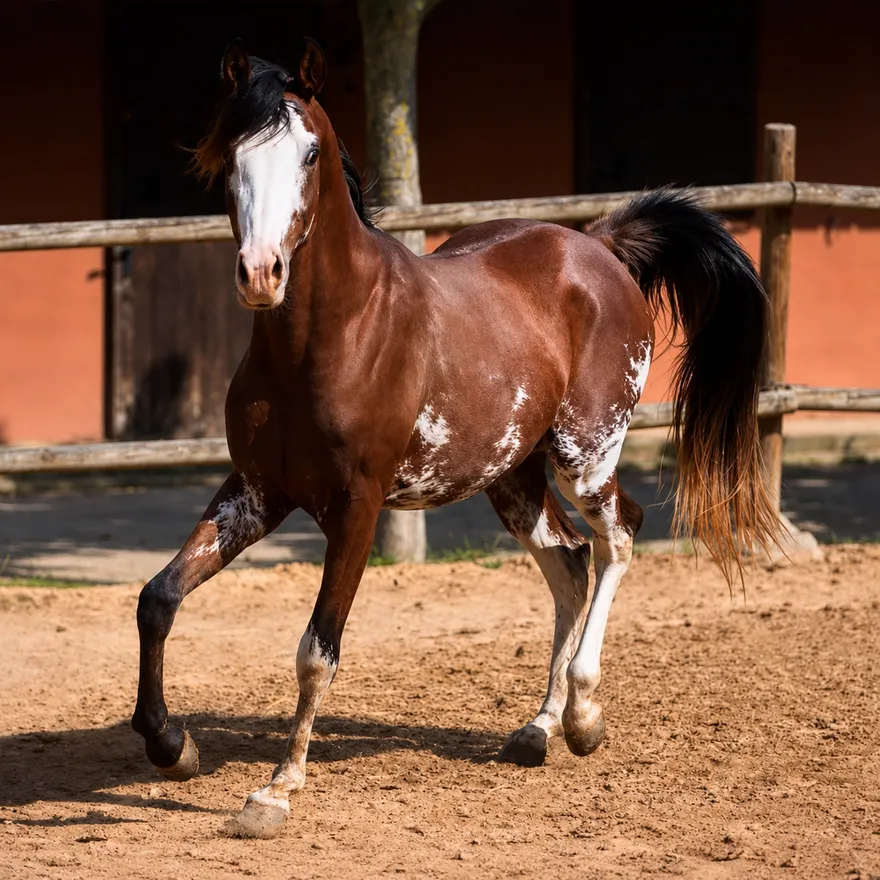
Two variants at the heart of our selection.
Our work focuses on W19 and W17: two variants described in KIT, with very different origins, expressions and evidence. For reference, the axis also includes the five covered by UC Davis’s Dominant White test.
15multi-variant haplotypes described by McFadden et al. (2024): variants that travel together on the same chromosome. W17 is precisely that.
KIT · documented variantsReference order · not to scale
- Test
- UC Davis VGL · Dominant White
- Heterozygous
- White pattern with variable expression
- Homozygous
- Probably lethal
- Test
- UC Davis VGL · Dominant White
- Heterozygous
- White pattern with variable expression
- Homozygous
- Probably lethal
- Test
- UC Davis VGL · Dominant White
- Heterozygous
- White pattern with variable expression
- Homozygous
- Probably lethal
- Origin
- Japanese draught horse
- Variant
- Two-change missense haplotype (p.E667D + p.L674P), exon 14
- Expression
- White with heterochromia: one brown eye and one blue eye
- Homozygous
- No published data
- Described in
- Haase et al. (2011)
A haplotype, not a single mutation: two changes travelling together on the same chromosome, and therefore described as one unit.
- Origin
- Arabian horse
- Variant
- Missense change p.Y441C, exon 8
- Expression
- Washed-out face, markings above the knees and hocks, irregular belly spots
- Described in
- Hauswirth et al. (2013)
Described in the Arabian horse, W19 is part of our selection and is recognised by a white expression that can take different forms in each individual.
- Test
- UC Davis VGL · Dominant White
- Heterozygous
- White pattern with variable expression
- Homozygous
- Documented viable
- Test
- UC Davis VGL · Dominant White
- Heterozygous
- White pattern with variable expression
- Homozygous
- Probably lethal
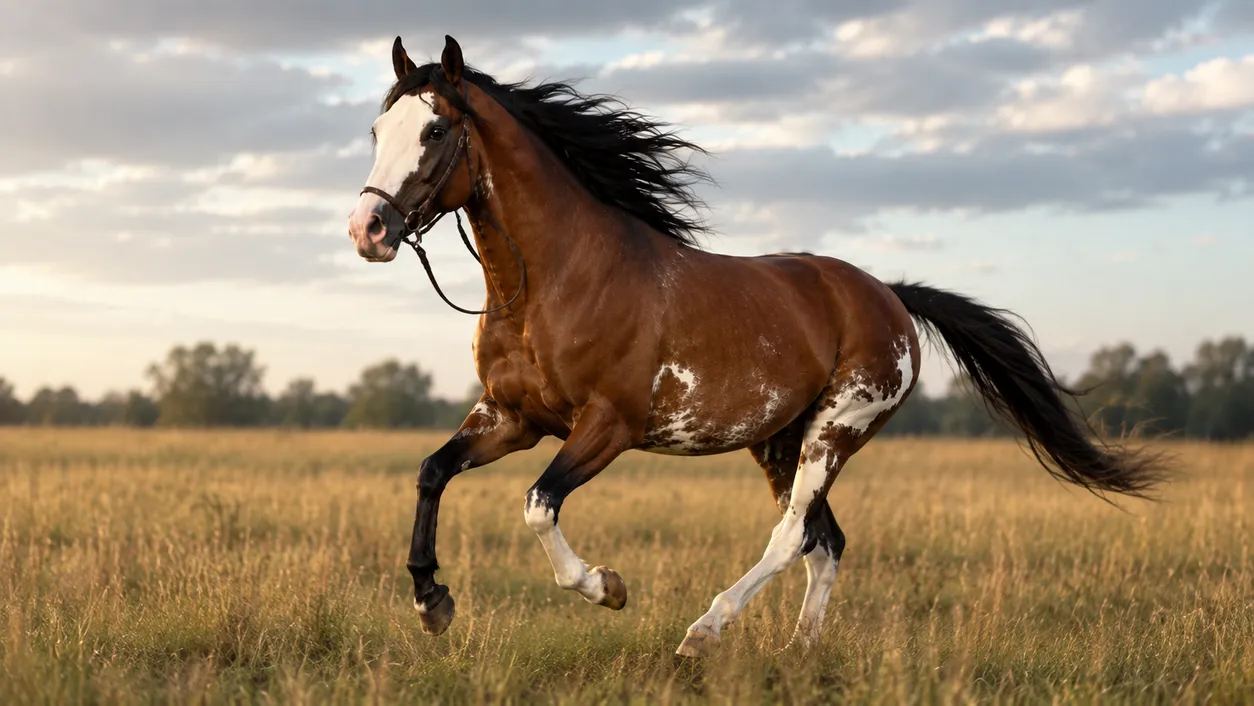
A signature like no other
One letter, many ways to express it.
Its appeal lies in its visible diversity: irregular edges, speckled areas, large expanses of white or more subtle expressions. Even within the same variant family, appearance can differ.
In our selection, that expression comes together with the type and character we seek in each horse. Discover our carriers and find the one that suits your breeding project.
Genetics available now
These variants are already part of our programme.
Meet the Morales-Jaworska horses with W19 confirmed in their genetic profile. Explore their characteristics, availability and breeding or sales options.
Responsible practice
From intuition to an informed decision.
The aim of a test is not to predict everything, but to reduce uncertainty and place each cross within a framework of verifiable knowledge.
Identify the variant
Testing by a qualified genetic laboratory can establish which variant or variants are present. Appearance alone is not enough.
Read the full context
Genotype, haplotype—the variants that travel together—and pedigree should be interpreted together, not as isolated data.
Plan each cross
Every combination calls for an individual assessment of possible outcomes, available evidence and the welfare of the offspring.
Consult specialists
Results and breeding decisions should be discussed with equine genetics and veterinary professionals.
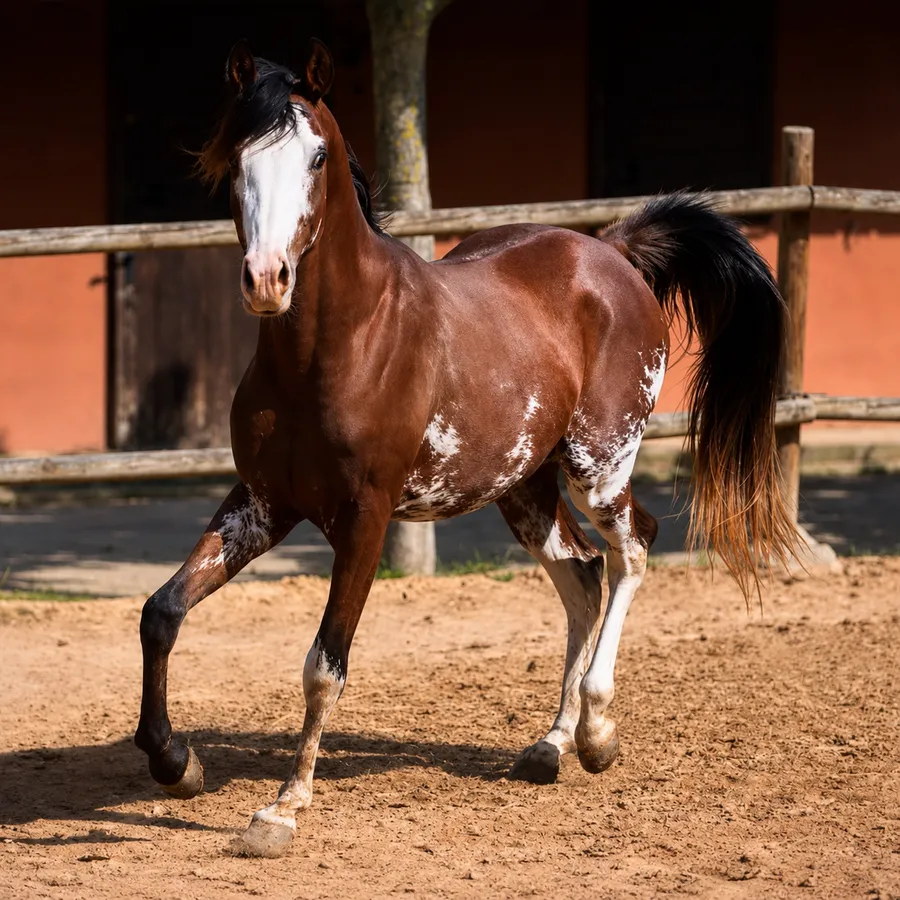
Before making a decision
Points worth bearing in mind.
- Phenotype does not identify the variant
- Two horses with a similar appearance may have different genetic backgrounds; two carriers of the same variant may show different expressions.
- Variants do not all behave alikeCaution
- Homozygous W5, W10, W13 and W22 are considered probably lethal during embryonic development, and certain combinations also call for caution. This is not a universal rule: W20 is documented as viable when homozygous.
- White, grey and other patterns are not synonyms
- Dominant White should be distinguished from grey—which progressively lightens with age—and from other unrelated white-pattern mechanisms.
- Testing is one part of selection
- Genetic results are informative, but do not replace assessment of the whole horse: health, conformation, temperament, function and welfare.
Further reading
Sources for further study.
- Hauswirth et al., Animal Genetics (2013)Novel Variants in the KIT and PAX3 Genes in Horses with White-Spotted Coat Colour Phenotypes
- Haase et al., Animal Genetics (2011)Five Novel KIT Mutations in Horses with White Coat Colour Phenotypes
- UC Davis Veterinary Genetics LaboratoryDominant White Mutations
- Haase et al., PLOS Genetics (2007)Allelic Heterogeneity at the Equine KIT Locus in Dominant White (W) Horses
- McFadden et al., Animals (2024)Population Analysis Identifies 15 Multi-Variant Dominant White Haplotypes in Horses
- OMIA · Online Mendelian Inheritance in AnimalsCoat Colour, Dominant White in Equus caballus — Variant record
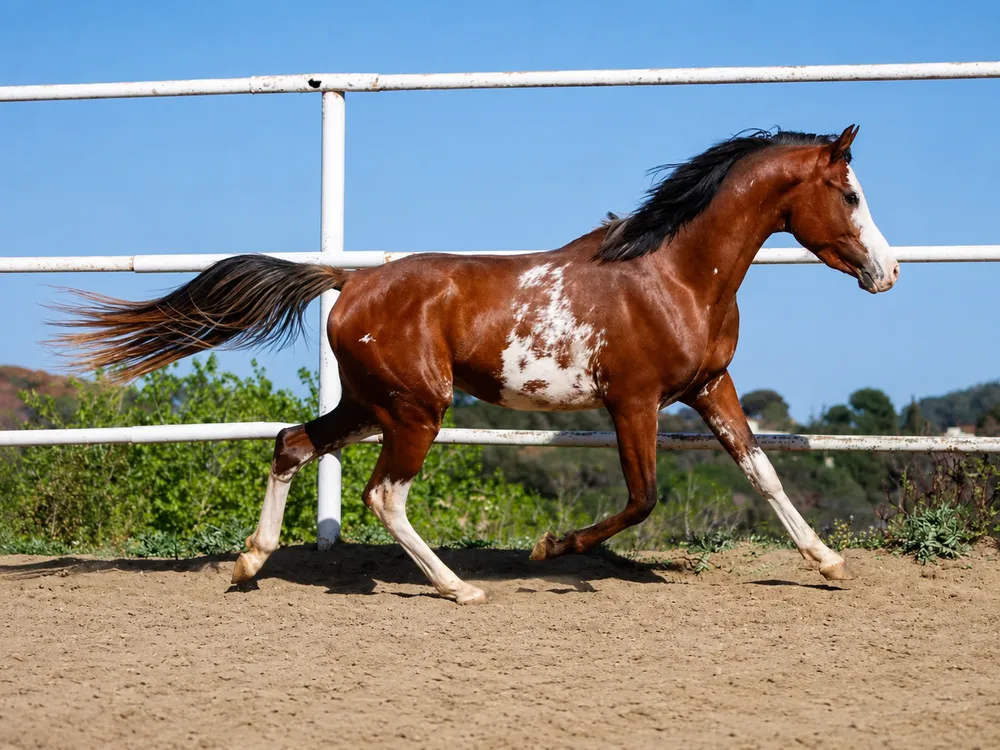
Bring this genetics into your programme
Let’s talk about your next cross.
Behind every carrier are laboratory testing, a documented pedigree and responsible breeding criteria. These make it possible to offer distinctive genetics with confidence grounded in evidence, not only an attractive photograph.
Tell us what you are looking for—breeding, a purchase or simply a second opinion on genetics—and we will help you decide with the evidence on the table.